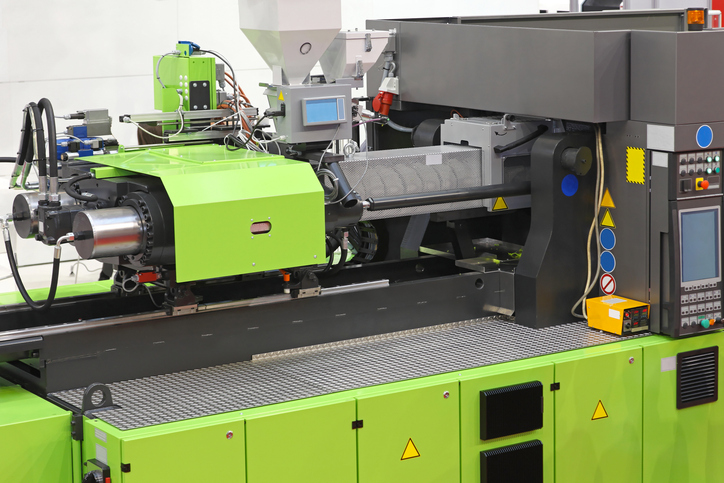
Injection is one of the most commonly used methods of plastic manufacturing. Its process has been homed in on for decades and with the continual rise in more advanced technology, more stringent quality control measures, alternative material sources, and the continuous introduction of automation, it’s never been more critical to know exactly how the injection molding process works.
From clamping through ejection and into quality assurance checks, Triad Plastic Technologies thinks it’s important for existing and prospective customers to understand the critical steps in the injection molding process and what makes them important.
The Injection Molding Process
Injection molding can vary in the exact number of steps, but that’s because some manufacturers will lump together certain portions of the process and count it as one part. However, there are generally nine specific moments in the injection molding process that happen during a production run.
Customers could consider any engineering that takes place before production as part of the process such as design reviews and assistance with material selection, but we’ll focus on the actual production steps itself.
Injection molding starts off with the mold halves joining and closing and then clamping where preset tonnage is used to keep the mold closed in the face of the injection pressure. The injection process then begins as melted polymers travel through the mold and are filled within the cavity or cavities if it’s a multi-cavity mold.
After the first injection of the melted plastic, pressure is lowered to account for material shrinkage within the mold’s cavity or cavities. A key point in this part of the process is maintaining cushion, which is the small amount of remaining plastic in the front of the injection nozzle at the end of a fill. When cushion is maintained, it ensures repeatable quality.
Cooling immediately follows and this is often the longest part of the injection molding process as it has an immediate impact on maintaining dimensional stability and cycle time efficiency. During cooling, however, the final shot is injected into the mold.
When proper filling has occurred and cooling time has expired, the mold is opened and then the final component is ejected, thus ending the process.
Critical Aspects of the Process
There isn’t a single part of the injection molding process that isn’t important. Every part of the manufacturing process has to occur as intended to avoid potential defects and costly reworks. There are some portions, however, that are more important than others because they impact not only the component, but the entire process itself.
The first being appropriate clamping force. It must be greater than the injection pressure in order to prevent flash, which is excess melted plastic. Injection speed and pressure impact filling patterns and surface finish, so technicians and engineering teams should ensure that calculations and programming are clearly defined.
When determining the length of your program’s cooling time, wall thickness, material type, and the mold temperature itself factor into how long appropriate cooling time should be. Improper cooling time can lead to many defects including structural defects and geometric failures such as surface depressions, internal voids, and twisting.
Contact Triad Plastic Technologies for More Injection Molding Process Tips
Triad Plastic Technologies, located in Reno, Nevada, are on the cutting-edge of custom injection molding practices. Our differentiator is our continuous investment in the latest technology available to streamline and enhance the injection molding process.
No matter how advanced technology may become, there are still going to be key parts of the process that will demand focus to ensure high-quality components with minimal defects.
Contact our team today and let’s partner together to create your next batch of parts.